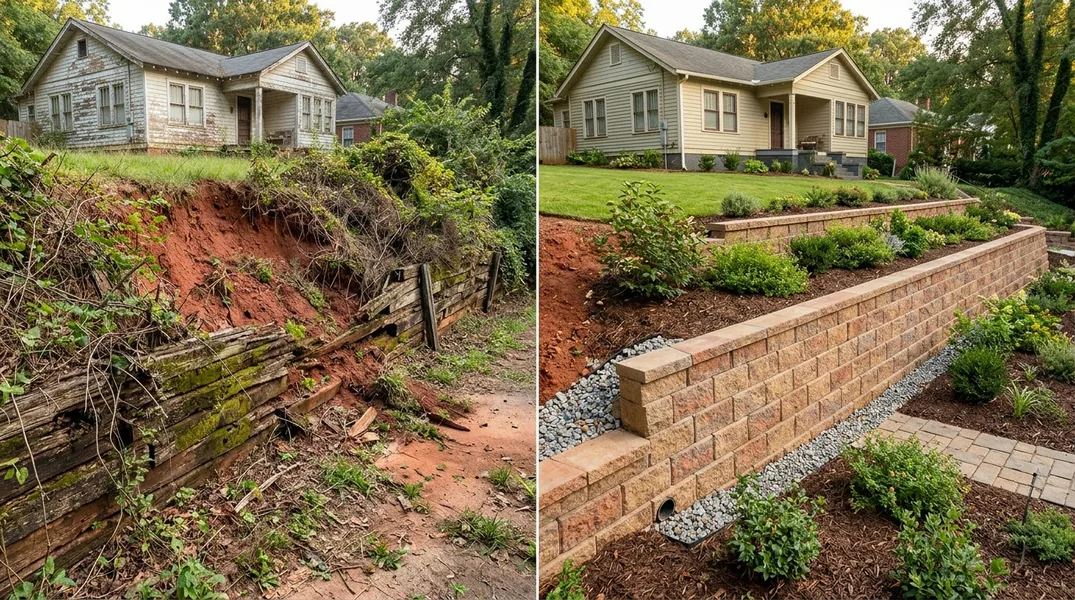
Signs Your Retaining Wall Is in Trouble
A leaning retaining wall is one of the most visible signs that something has gone wrong with your landscape structure. If you've noticed your retaining wall tilting away from the soil it's meant to hold back, or if it's leaning inward, this is not a cosmetic issue. A wall that leans is experiencing structural failure, and the longer you wait to address it, the more expensive and dangerous the problem becomes.
Beyond the obvious tilt, other warning signs include visible cracks running through the wall, bulging sections, or water pooling behind the structure. You might also notice soil or mulch spilling out from behind the wall, or the wall pulling away from adjacent structures like your home's foundation or fence. In Charlotte, where clay-heavy soils and seasonal moisture changes are common, retaining walls face unique pressures that can accelerate deterioration. If you're seeing any of these symptoms, it's time to evaluate whether Retaining Wall Repair or full replacement is the right solution.
Why Retaining Walls Lean: Common Causes in Charlotte
Understanding why your retaining wall is leaning helps determine the best fix. The most common culprit is poor drainage. When water accumulates behind a retaining wall, it creates hydrostatic pressure that pushes the wall outward or causes it to shift. In Charlotte's climate, heavy rain and seasonal moisture can overwhelm inadequate drainage systems, especially in walls that were installed without proper gravel backfill or drainage pipes.
Another frequent cause is settling soil beneath the wall's foundation. If the base wasn't properly compacted during initial installation, the wall can shift as the soil underneath shifts over time. Soil composition matters too. Charlotte's clay soils expand when wet and contract when dry, creating movement that pushes against the wall. Additionally, tree roots growing behind or beneath the wall can destabilize it, as can poor construction technique or inadequate reinforcement. Sometimes a wall leans because it was undersized for the height and soil load it was asked to support.
Repair vs. Replacement: How to Decide
When faced with a leaning retaining wall, homeowners often ask: can we fix this, or do we need to start over? The answer depends on the severity of the lean, the wall's age, the underlying cause, and the extent of visible damage. Minor leans of less than one inch over the wall's height, combined with no cracking, might be candidates for Retaining Wall Repair. These repairs typically focus on improving drainage, addressing the root cause, and stabilizing the structure without removing it entirely.
However, if the wall is leaning significantly, showing major cracks, or if the underlying soil is unstable, Retaining Wall Replacement is usually the safer and more cost-effective option in the long run. A severely compromised wall can fail suddenly, potentially causing injury or property damage. A replacement allows you to address the original installation mistakes, improve drainage design, and use modern materials and techniques that prevent future problems. Professional assessment is critical here, because what looks like a simple fix might mask deeper structural issues that will resurface within a year or two.
When Repair Makes Sense
Retaining wall repair is most appropriate when the lean is minor and caused by a fixable problem like poor drainage or minor settling. If your wall is relatively young, made of quality materials like Concrete Retaining Walls, and the lean has stabilized (meaning it's not getting worse month to month), repair might restore it to function. Repair work typically involves excavating behind the wall to install or improve drainage systems, adding reinforcement like wall ties or bracing, and addressing any cracks with appropriate sealants or injections.
The advantage of repair is lower upfront cost compared to full replacement. If the structural integrity is still sound and the wall's foundation is stable, strategic repairs can extend its life significantly. However, repairs are not a permanent solution if the underlying cause isn't fully resolved. A wall repaired for drainage issues will fail again if the drainage system isn't properly designed and maintained. Before committing to repair, get a professional evaluation to ensure the fix will actually solve the problem rather than just postpone it.
When Replacement Is the Better Choice
Full Retaining Wall Replacement is the right choice when the wall is severely compromised, has failed multiple times, or when repair costs approach or exceed replacement costs. If the lean is severe (more than two to three inches of movement), if there are major structural cracks, or if the wall is pulling away from your home's foundation, replacement eliminates the risk entirely. A new wall, properly designed and installed, will handle Charlotte's soil and weather conditions for decades without the problems that plagued the original.
Replacement also gives you the opportunity to upgrade materials and design. Modern retaining walls can incorporate better drainage systems, proper soil compaction, reinforced concrete, or segmental block systems engineered for your specific site conditions. You can also adjust the wall's height, angle, or location if the original placement created problems. While replacement requires more upfront investment, it provides peace of mind and eliminates the nagging worry that the wall might fail again.
Retaining Wall Repair and Replacement Cost in Charlotte: What to Budget
Cost is understandably a major consideration when deciding between repair and replacement. Retaining Wall Repair typically ranges from a few hundred dollars for simple drainage improvements to several thousand for structural reinforcement and crack repair. The exact cost depends on the wall's size, the cause of the lean, and the complexity of the fix. Most repairs in the Charlotte area fall between $1,500 and $5,000, though minor work might be less and major repairs could exceed this range.
Retaining Wall Replacement is more expensive, typically ranging from $3,000 to $15,000 or more depending on the wall's length, height, and the materials used. Concrete Retaining Walls and engineered segmental systems cost more than timber but last much longer. While replacement represents a larger investment upfront, it often saves money over time by eliminating recurring repair costs. To understand your specific situation and get accurate pricing for your wall, contact Charlotte Retaining Wall for a free estimate. Our team will inspect your wall, identify the cause of the lean, and provide honest recommendations about whether repair or replacement makes the most sense for your budget and your home's long-term safety.
Next Steps: Getting Professional Help Near You
If you're dealing with a leaning retaining wall in Charlotte, the best first step is a professional inspection. A qualified contractor can determine the severity of the problem, identify the root cause, and recommend the most cost-effective solution. Don't rely on guesswork or temporary fixes that might mask deeper issues. A leaning wall is a structural problem that only gets worse with time and weather exposure.
Charlotte Retaining Wall has helped homeowners throughout the area address failing walls through expert repair and replacement services. We understand the local soil conditions, drainage challenges, and building standards that affect retaining walls in this region. Whether your wall needs repair or replacement, we'll provide a thorough assessment and transparent recommendations. Call us at (980) 414-6473 or visit our website to schedule your free estimate today. Don't wait until a leaning wall becomes a failing wall. Let's protect your property and your peace of mind.
Looking for a professional retaining wall contractor in Charlotte? Charlotte Retaining Wall responds fast for all your retaining wall needs.
Get a Free QuoteOur services: Retaining Wall Installation · Retaining Wall Repair · Retaining Wall Replacement